
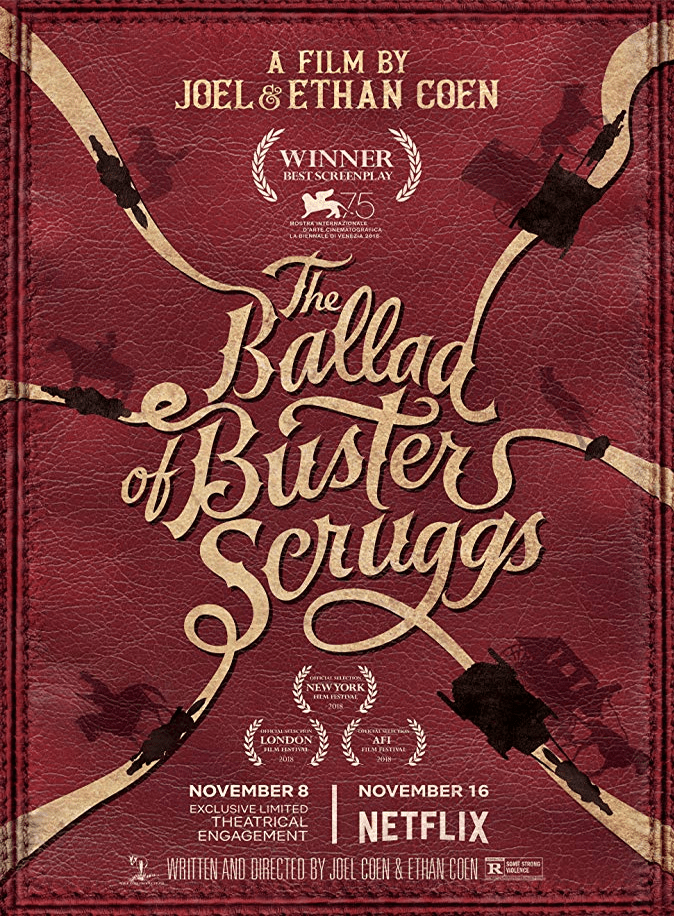
Directors: Ethan Coen, Joel Coen
Writers: Joel Coen, Ethan Coen
Stars: Tim Blake Nelson, Willie Watson, Clancy Brown, James Franco, Liam Neeson, Tom Waits, Brendan Gleeson
“The Ballad Of Buster Scruggs” is a unique cinematic experience, consisting of six individual tales set against the backdrop of the Old West, each offering its own perspective on life and violence. These stories feature a singing gunslinger, a bumbling bank robber, a charismatic impresario, an elderly prospector, a perilous wagon train, and a pair of enigmatic bounty hunters. Unlike some other films, there is no Tarantino-esque intertwining of themes here; each tale stands alone, making it a refreshing departure from conventional storytelling.
Surprisingly, the film’s first segment, “The Ballad of Buster Scruggs,” not only shares its title with the movie but also leads the narrative. It commences on a lighthearted note, with a comedic tone and a catchy sing-song at the local saloon. Tim Blake Nelson plays the singing cowboy who affectionately goes by “The San Saba Songbird” and occasionally breaks the fourth wall to engage with the viewer. The abrupt finale may catch you off guard, but it effectively prepares you for the unexpected storytelling that unfolds throughout the film. As the narrative progresses, it takes a darker turn, delving into some rather grim territory. To maintain this review spoiler-free is crucial for those approaching the film for the first time. It’s the subtle shifts in storytelling that keep you riveted, eagerly anticipating what the next story will bring.
In the second segment, “Near Algodones,” a cowboy played by James Franco attempts a bank heist that goes awry, leaving him in a dire predicament. This particular segment, consistent with the Coen Brothers’ style, relies on minimal dialogue and emphasizes the power of story and setting. The key takeaway here is the rapid descent of a character’s fortune in the unforgiving landscape of the Old West due to a series of unfortunate choices.
“The Meal Ticket,” the film’s third segment, is possibly one of my favorites. Liam Neeson plays an Impresario who arrives in a town, promoting the talents of “Harrison: ‘The Wingless Thrush’ – Celebrated Thespian, Orator, and Entertainer.” Harrison’s performance is a one-man show, portrayed by Harry Melling, an actor without arms or legs. The Artist captivates audiences with segments of Shakespeare’s works, and the initial showings are well-received. However, as they move from town to town, audiences dwindle, forcing Neeson’s character to reconsider his strategy for survival. Without revealing any spoilers, I can attest that the decisions made in this segment are ruthless. This part of the film underscores the lengths some individuals are willing to go in the ruthless world of show business. Ironically, the Impresario himself realizes how far he can stoop to achieve success.
“All Gold Canyon” is my personal favorite segment and serves as a one-man show for a significant portion, featuring Tom Waits. It appears to be the segment that the Coen Brothers invested the most in, with stunning landscapes and a remarkable score. Waits’ performance is exceptional as a lone prospector toiling relentlessly in his quest to uncover gold from the river. There are moments in this segment where, despite his label as a “ruthless gold digger,” the prospector demonstrates respect for his surroundings and the wildlife. I must admit, I was initially taken aback by what I thought was the ending (no spoilers here), but fortunately, there is a moment that redeems the situation and leaves you feeling satisfied.
The film’s fifth segment, “The Gal Who Got Rattled,” is the one that left me the most frustrated with its ending. However, I understand that this is precisely the reaction the filmmakers intended, as there’s an element of Shakespearean tragedy in the fate of the two characters, even though they weren’t lovers. Siblings Gilbert and Alice are on their way to Oregon when Gilbert dies of cholera, leaving his sister with nothing but a $400 debt to the man in charge of their wagon, Matt. A kind cowboy named Billy Knapp, responsible for the train, befriends Alice and proposes marriage to her, effectively assuming her debt. As the story progresses, the wagon train continues to traverse the rugged terrain, and at some point, Alice goes missing, leading to a perilous encounter with Comanche. “The Gal Who Got Rattled” is the most emotionally charged story of the six, with the characters more intricately connected due to their shared predicament and the brutality witnessed in previous tales. This segment introduces a more compassionate and human element, which ends in sadness.
The film’s final segment, titled “The Mortal Remains,” is centered around the theme of death, even though no one dies during the tale (not exactly a spoiler). The segment opens in a manner reminiscent of Quentin Tarantino’s “The Hateful Eight,” with a unique setting and dialogue-heavy scenes. Notable actors Tyne Daly, Chelcie Ross, Saul Rubenik, Brendan Gleeson, and Jojo O’Neill play essential roles. Although not my favorite segment, “The Mortal Remains” unravels an intriguing narrative that culminates in a rather surreal experience, concluding “The Ballad of Buster Scruggs” on an enigmatic note.
In summary, “The Ballad of Buster Scruggs” is an enthralling and eclectic work by the Coen Brothers. They skillfully utilize the Netflix platform to its full potential, attracting top-tier talent while maintaining creative control over their work with minimal studio interference. The film features alluring and diverse segments, each with compelling characters and distinct storytelling. What we are presented with is a cinematic work that captures the essence of the Old West through breathtaking visuals that expertly depict the changing seasons and settings. Each of the six short films is so engaging that one can’t help but imagine them expanded into full-length feature films. Overall, “The Ballad of Buster Scruggs” is a highly enjoyable and recommended cinematic journey, showcasing the Coen Brothers’ mastery in storytelling and their commitment to capturing the rich tapestry of the Old West. Enjoyable and Highly Recommended.
 Movie Burner Entertainment
Leave a comment