
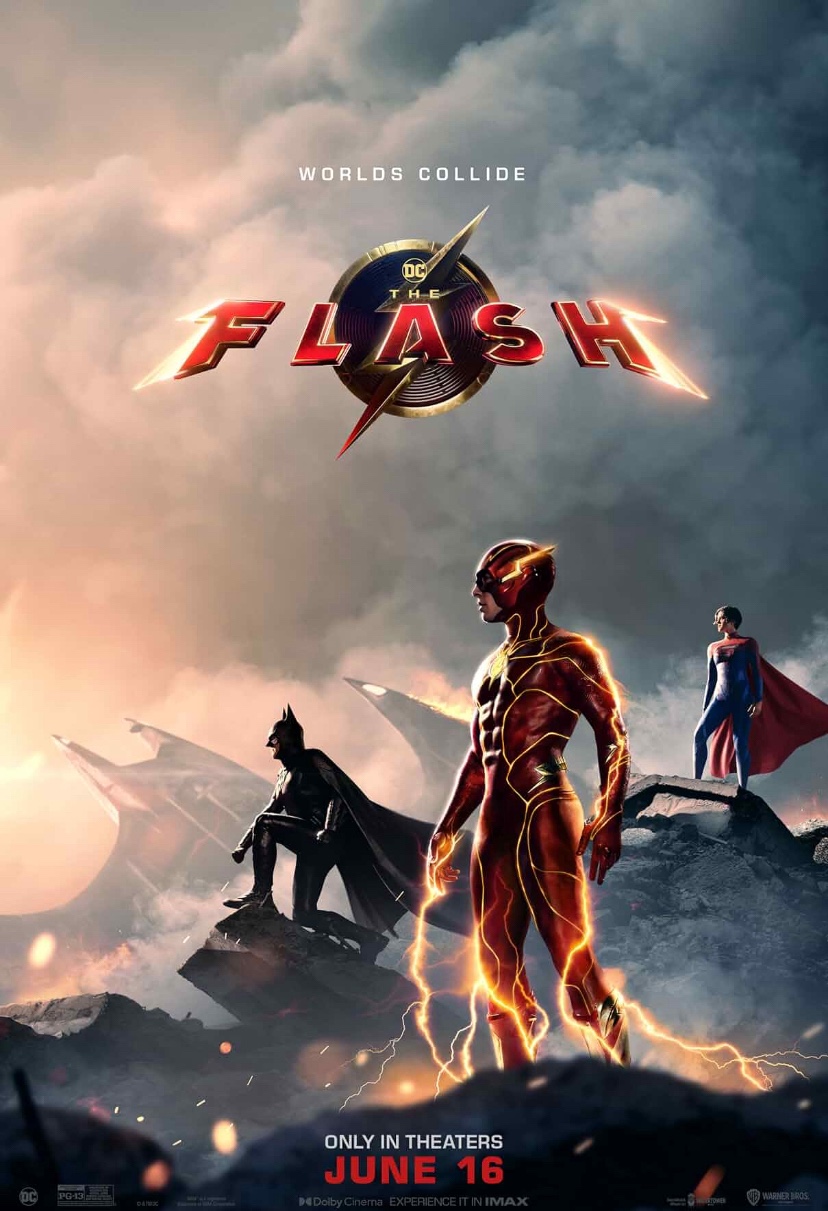
Director: Andy Muschietti
Writers: Christina Hodson (screenplay by), John Francis Daley (screen story by), Jonathan Goldstein (screen story by), Joby Harold (screen story by), Harry Lampert (The Flash created by), Gardner Fox (The Flash created by), Robert Kanigher (Barry Allen version by), Carmine Infantino (Barry Allen version by), Jerry Siegel (Superman created by), Joe Shuster (Superman created by), Bob Kane (Batman created by), Bill Finger (Batman created by), William Moulton Marston (Wonder Woman created by)
Stars: Ezra Miller, Michael Keaton, Sasha Calle, Ben Alleck
Andy Muschietti’s The Flash (2023) arrives as one of the most anticipated yet divisive entries in the DC Extended Universe (DCEU). Loosely adapting the Flashpoint storyline from the comics, the film follows Barry Allen (Ezra Miller) as he uses his speed to travel back in time in an attempt to prevent his mother’s murder. However, this seemingly noble act has catastrophic consequences, creating a fractured timeline where superheroes are largely absent and an alternate General Zod (Michael Shannon) arrives to conquer Earth unchallenged. With the help of his younger self, an older Batman (Michael Keaton), and a previously unknown Kryptonian, Barry must set things right before reality collapses entirely.
One of the film’s strongest aspects is the return of Michael Keaton as Batman, a role he last played over 30 years ago. Keaton slips back into the cowl effortlessly, bringing a mix of wisdom, grit, and dry humour. His action sequences, though occasionally marred by CGI, offer some of the film’s most entertaining moments. Beyond the nostalgia factor, The Flash benefits from an emotional core centred around Barry’s love for his mother (Maribel Verdú). Unlike many superhero films that prioritise action over character, this story does explore the consequences of grief and the moral dilemmas of altering the past. Ezra Miller delivers a solid performance, particularly when portraying the contrast between the more mature Barry and his younger, more reckless counterpart.
One of the film’s most glaring issues is its visual effects. Despite a reported high budget, the CGI often looks unfinished, particularly in the time-travel sequences and certain character renderings. This is especially distracting in key moments, undermining what should be emotionally or narratively significant scenes. Additionally, the film struggles with pacing and tonal balance. The first act is engaging, but as the plot unfolds, the narrative becomes increasingly convoluted, particularly when introducing multiversal elements. While humour is a staple of modern superhero films, The Flash occasionally overindulges in comedic beats that undercut dramatic tension.
Sasha Calle’s Supergirl is an intriguing addition, though she receives limited screen time and development. Meanwhile, Michael Shannon’s return as Zod feels underwhelming, as the character lacks the menace and depth he displayed in Man of Steel (2013). The supporting cast—including Kiersey Clemons as Iris West and Ron Livingston as Barry’s father—doesn’t leave much of an impression. Benjamin Wallfisch’s score is serviceable, blending heroic themes with moments of emotional weight, but it never reaches the iconic status of other superhero soundtracks. Henry Braham’s cinematography does capture some striking visuals, yet the inconsistent CGI detracts from the overall aesthetic.
The Flash is an ambitious but flawed entry in the DCEU. While it delivers nostalgic thrills, particularly with Michael Keaton’s return, and offers an emotional core through Barry’s journey, it falters due to poor CGI, inconsistent storytelling, and an overreliance on humour. It’s an okay film that had the potential to be much better, but ultimately, it doesn’t live up to expectations.
Rating: 3/5



 Movie Burner Entertainment
Leave a comment