
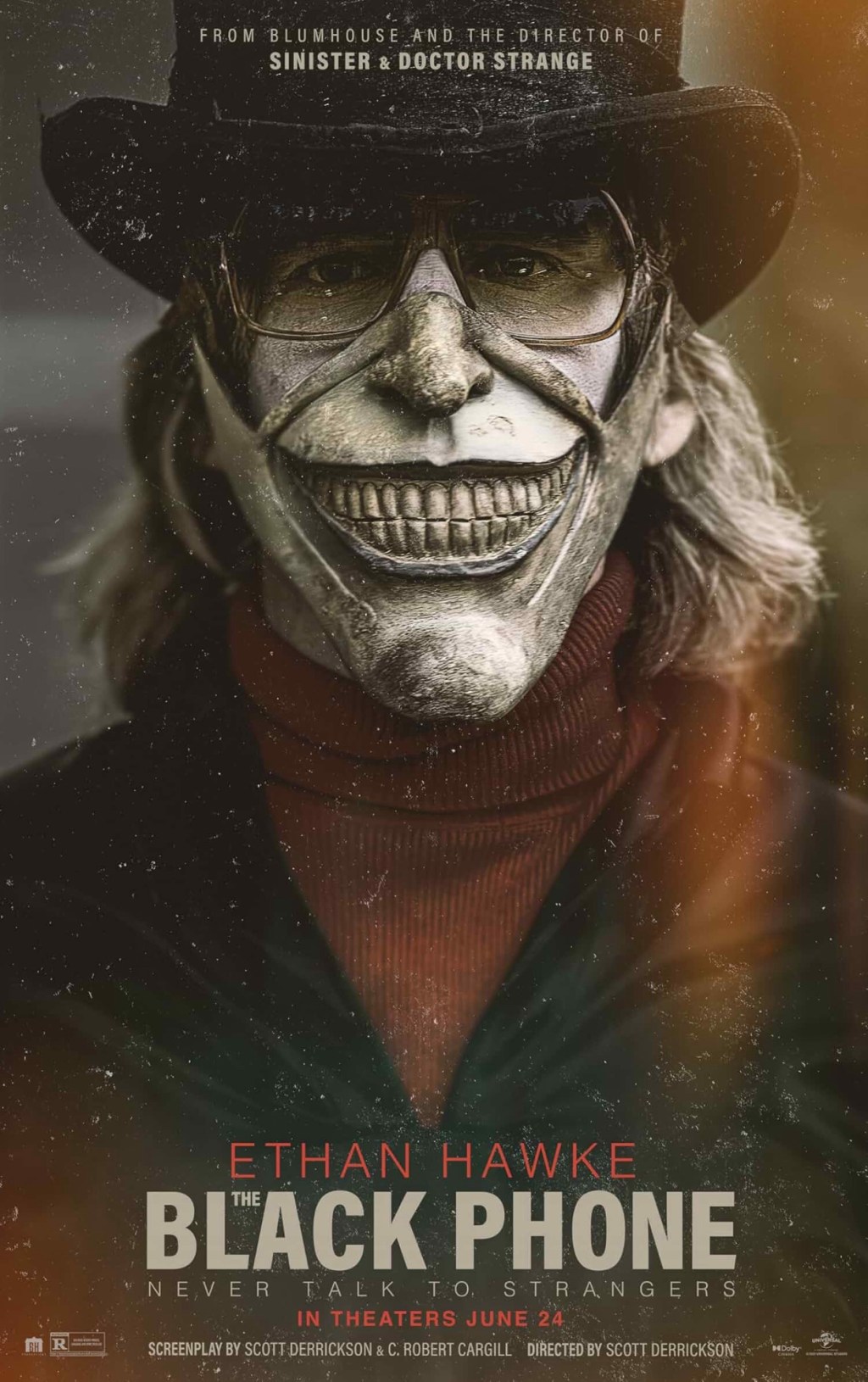
The Black Phone is a 2021 supernatural horror-thriller directed by Scott Derrickson, adapted from a short story by Joe Hill. With a cast led by Mason Thames, Madeleine McGraw, Ethan Hawke, and Jeremy Davies, the film offers a gripping blend of psychological tension, supernatural elements, and the dark fears of childhood. For those who found it a decent thriller, there’s a lot to appreciate, though it doesn’t always hit the mark in every area.
The film is set in a small American town during the late 1970s, a setting that enhances its eerie atmosphere. The plot centres on Finney (Mason Thames), a shy 13-year-old boy who becomes the latest victim of “The Grabber” (Ethan Hawke), a masked child abductor who has been terrorising the neighbourhood. The story quickly becomes a tense battle for survival as Finney is trapped in a soundproof basement, isolated from the outside world.
The title of the film comes from a mysterious disconnected phone on the wall of the basement. To Finney’s shock, it begins to ring, allowing him to communicate with the spirits of The Grabber’s previous victims. These spectral voices try to guide Finney towards a way to escape, adding a supernatural twist to the otherwise grounded horror scenario. The interactions between Finney and the ghosts lend the narrative a sense of urgency and mystery, keeping viewers on the edge of their seats.
One of the film’s strongest elements is its character work. Mason Thames delivers a compelling performance as Finney, bringing a mix of vulnerability and determination to the role. His portrayal makes it easy for audiences to invest in his struggle, and he manages to balance fear with a believable sense of resilience. Madeleine McGraw, playing Finney’s sister Gwen, provides a standout performance that adds emotional depth. Her character’s psychic visions—one of the film’s more overtly supernatural aspects—give a unique layer to the story, even if these scenes occasionally feel tonally dissonant with the film’s otherwise gritty realism.
Ethan Hawke’s portrayal of The Grabber is chilling and unsettling. He opts for a restrained yet menacing approach that makes the character genuinely frightening. The mask he wears throughout most of the film, designed by Tom Savini, contributes significantly to his eerie presence. The mask is used effectively as a tool of intimidation, revealing different segments of The Grabber’s face depending on his mood, which adds an extra layer of psychological horror.
The film’s direction and visual style stand out, with Scott Derrickson effectively using shadows, tight spaces, and the muted colour palette to create a sense of claustrophobia and dread. The production design captures the era’s aesthetic without turning it into mere nostalgia. The basement itself becomes almost a character in the film, with its dilapidated walls and the ever-present black phone serving as symbols of despair and hope. Derrickson also integrates elements of suspense and jump scares, though he leans more towards building an atmosphere of dread rather than relying solely on cheap thrills.
However, while The Black Phone succeeds in many aspects, it isn’t without its flaws. The film struggles at times with pacing, especially in its middle act. Certain scenes feel drawn out, which can cause the tension to wane slightly before ramping up again towards the climax. Additionally, the rules of the supernatural elements aren’t always clearly defined, leaving some of the ghostly interactions feeling somewhat convenient rather than deeply woven into the plot.
Jeremy Davies, who plays Finney and Gwen’s father, gives a performance that adds to the film’s unsettling tone. His character is abusive and troubled, creating a grim home life for the siblings. While this aspect of the story adds complexity to their lives, it also feels underexplored, leaving some viewers questioning the narrative’s decision to introduce such a dark domestic subplot without fully addressing its implications.
Despite these critiques, The Black Phone largely delivers as a thriller. It manages to build a tense, engaging atmosphere and offers a story that blends horror with a coming-of-age narrative. The film’s themes of courage, survival, and the resilience of children resonate strongly, especially against the backdrop of the horror genre’s often bleak landscape. For viewers who appreciate a thriller that leans more towards psychological and atmospheric terror, The Black Phone is a satisfying watch, even if it doesn’t fully transcend its genre conventions.
In conclusion, The Black Phone is a decent, well-crafted thriller that succeeds in creating a haunting atmosphere and delivering strong performances, particularly from its young leads and Ethan Hawke. It may not reinvent the wheel, but it offers a gripping ride through fear, hope, and the supernatural. Fans of Derrickson’s previous work or those looking for a thriller with a supernatural edge will find much to enjoy, even if the film occasionally falters in its pacing and narrative depth.




 Movie Burner Entertainment
Leave a comment