
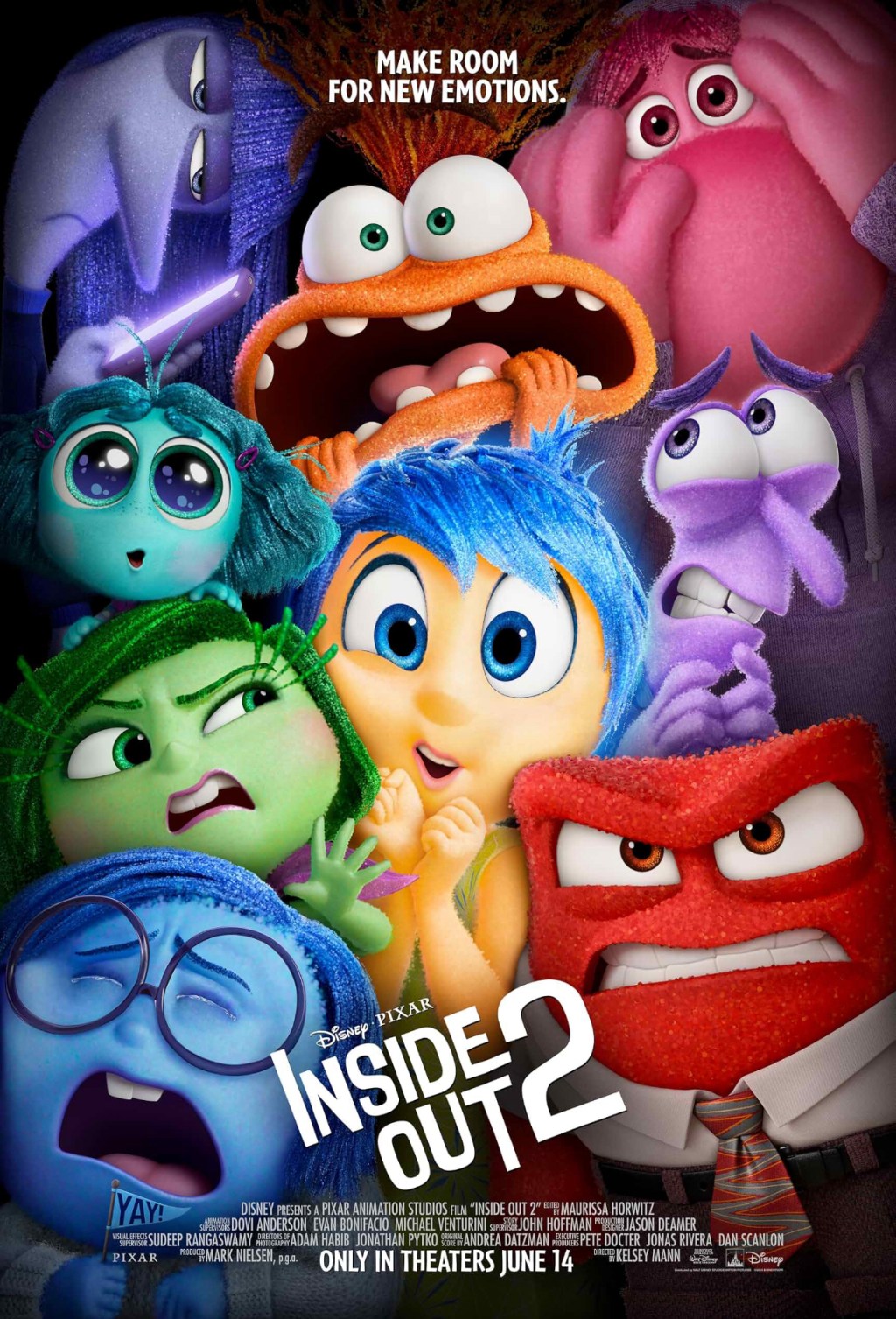
Inside Out 2, directed by Kelsey Mann, is the long-anticipated sequel to Pixar’s acclaimed 2015 film Inside Out. This follow-up revisits the beloved world inside Riley’s mind, delving into the tumultuous period of adolescence with a fresh perspective. Although it doesn’t quite match the original’s emotional depth, Inside Out 2 proves to be a worthy successor, blending humour, heart, and a thoughtful approach to the complexities of growing up.
Written by Meg LeFauve, Dave Holstein, and Kelsey Mann, Inside Out 2 builds on the foundation of the first film by continuing to explore Riley’s emotions as she navigates the rollercoaster of adolescence. The writers tackle an inherently challenging phase—teenagehood—with insight, capturing the increased emotional complexity and self-awareness that comes with this life stage. While the narrative has a slower build-up than the original, it gradually immerses viewers in Riley’s internal world, where new emotions appear alongside familiar faces.
What sets Inside Out 2 apart from its predecessor is its subtle commentary on change and mental health. With the introduction of new emotions, the film hints at how one’s emotional landscape can shift dramatically during adolescence. This is where the writing team shines, deftly weaving humour and poignancy into moments of introspection without feeling didactic.
Returning cast members like Amy Poehler as Joy, Phyllis Smith as Sadness, and Lewis Black as Anger bring a familiar warmth and energy to their roles. Poehler continues to imbue Joy with boundless optimism, but here, her character faces new challenges in balancing emotions that are less clear-cut. Phyllis Smith’s Sadness remains a standout, her character becoming more nuanced as Riley’s experiences deepen.
Notable new additions include Maya Hawke, Kensington Tallman, and Ayo Edebiri. Their performances bring fresh layers to the story, with Hawke in particular delivering a subtle, complex portrayal of an emotion representing the anxieties and uncertainties of adolescence. These new characters are a welcome addition, although they occasionally overshadow the core emotions from the original film, giving the story a slightly crowded feel at times. Nonetheless, the cast’s collective chemistry brings a vibrant, often humorous dynamic to the emotional landscape, making each character feel vital to Riley’s journey.
If the first film’s theme was about accepting all emotions as valid, Inside Out 2 takes this idea further by illustrating how emotions evolve and sometimes clash during adolescence. The film explores the confusion and inner conflict many teens experience, as they grapple with new emotions that don’t always align or make sense. This thematic shift feels mature and timely, as it encourages viewers to see emotional growth as an ongoing, sometimes messy, process.
The film doesn’t shy away from heavier themes, either. Moments touching on anxiety, insecurity, and self-doubt resonate deeply, particularly for older audiences. For younger viewers, these scenes may not always land with the same impact as the first film’s more straightforward messaging. However, they offer valuable insight into the complexities of mental health, adding a layer of realism to the otherwise whimsical, fantastical premise.
Pixar has once again delivered a visual treat with Inside Out 2. The vibrant colour palette and fluid animation breathe life into Riley’s emotional world, with new “regions” of her mind providing a sense of exploration and novelty. The animation style feels familiar yet slightly more refined, aligning well with the film’s themes of change and maturity.
One of the film’s most impressive sequences takes place within a newly introduced “identity island,” a setting that symbolises Riley’s struggle with self-image and identity. The island’s abstract design captures the fragmented, ever-shifting nature of teenage self-perception, allowing the animators to play with surreal, imaginative visuals that are both engaging and meaningful.
The score brings continuity to Inside Out 2, echoing the emotional cues of the original film while adapting to the more complex tones of the sequel. The music blends a sense of nostalgia with a slightly edgier, more introspective feel, matching the heightened stakes of Riley’s emotional journey. The sound design further enhances the immersion, with subtle audio cues that mark the arrival of new emotions or hint at Riley’s inner turmoil.
Inside Out 2 might not fully capture the groundbreaking essence of the original film, but it comes close, delivering a thoughtful exploration of teenagehood with Pixar’s trademark balance of heart and humour. The film’s exploration of emotional complexity, while sometimes dense, feels refreshing and relevant. By introducing new emotions and allowing Riley’s inner world to grow and change, Inside Out 2 offers viewers a fresh perspective on emotional resilience and self-discovery.
While it may not reach the same universal appeal as Inside Out, the sequel is a commendable, nuanced attempt to address the challenges of adolescence, resonating particularly with viewers who have aged alongside Riley. It’s a worthy continuation that doesn’t merely retread old ground, making it a valuable addition to Pixar’s canon.




 Movie Burner Entertainment
Leave a comment