
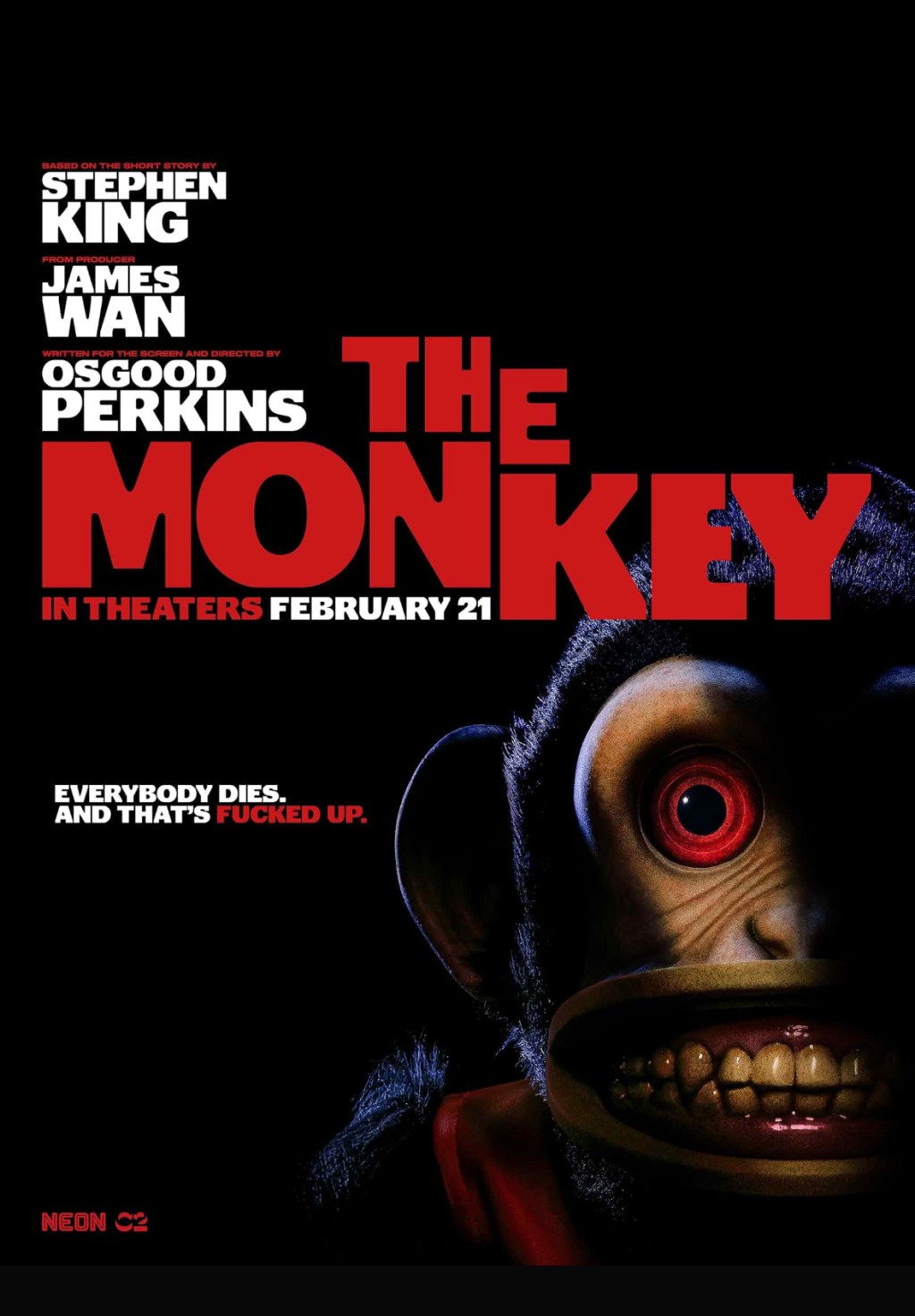
Osgood Perkins’ The Monkey, adapted from Stephen King’s short story, is an unsettling blend of horror and dark comedy, featuring strong performances and a creeping sense of dread. While not without its flaws, the film delivers an eerie atmosphere and an intriguing character dynamic between its leads.
The story follows twin brothers Bill and Hal, who discover their father’s old monkey toy in the attic. Unbeknownst to them, the toy is cursed, triggering a series of gruesome deaths each time its cymbals clash. As children, they try to rid themselves of it, but its malevolent influence lingers. The film then shifts forward in time, with the now-estranged brothers forced to confront the horror they left behind.
The film successfully builds tension in its first half, capturing the unsettling nature of the toy’s presence. Perkins takes his time setting up the eerie atmosphere, focusing on the psychological impact the deaths have on the brothers. The blend of horror and dark comedy is evident in how the deaths unfold—often shocking and grotesque, yet tinged with a macabre humour that prevents the film from feeling overly grim. However, the pacing in the second half falters slightly, as the narrative slows down when it should be ramping up towards its climax.
Theo James delivers a solid performance as the adult Bill, balancing vulnerability and determination, while Christian Convery and Colin O’Brien do well as the younger versions of the brothers, capturing their fear and confusion. Tatiana Maslany brings emotional weight to the story, though her character could have been more fleshed out. Elijah Wood adds an eerie presence to the film, his performance fitting seamlessly into its unsettling tone.
The film’s cinematography, handled by Nico Aguilar, enhances its eerie quality. The lighting is often dim and shadowy, giving scenes a claustrophobic feel. Edo Van Breemen’s score is effective, with unsettling melodies that heighten the tension without overpowering the visuals. The monkey toy itself is used sparingly but effectively—each cymbal clash is timed for maximum impact, making even predictable moments feel tense.
One of the film’s greatest strengths is its atmosphere, which Perkins builds meticulously. The sense of unease lingers throughout, and the blending of dark comedy with horror adds a unique touch. However, the film doesn’t fully capitalise on its concept, as some of the later developments feel repetitive. The estrangement between the brothers is a compelling angle, but their reunion and final confrontation with the monkey feel underdeveloped.
The Monkey is a decent horror film with a darkly comedic edge. It benefits from strong performances, eerie cinematography, and an unsettling score, though its pacing issues and underdeveloped third act hold it back from being truly great. Fans of Perkins’ slow-burn horror style and Stephen King adaptations may find much to appreciate, but it might not leave a lasting impression beyond its eerie premise.
 Movie Burner Entertainment
Leave a comment