
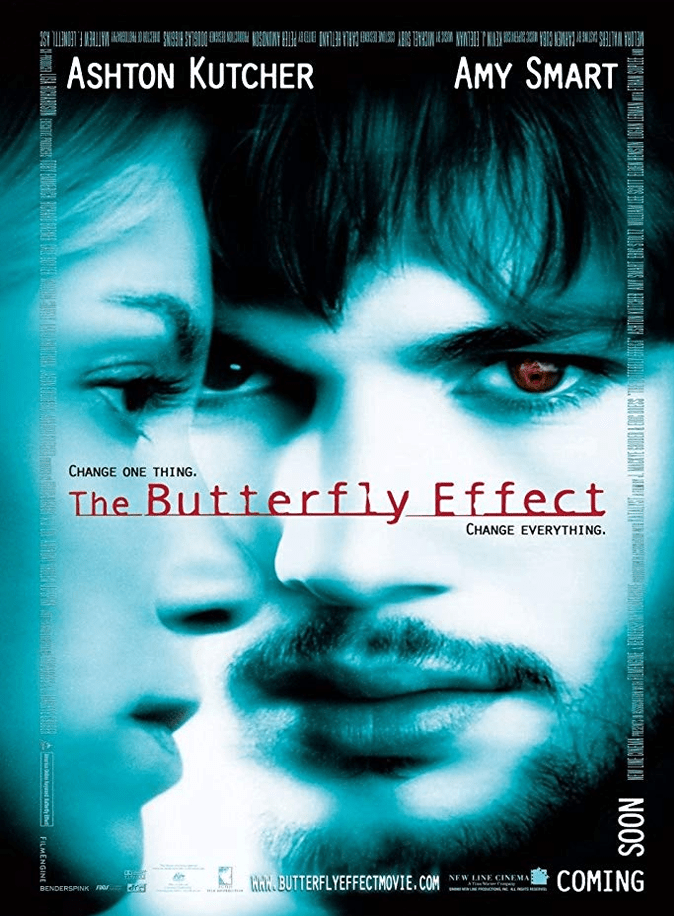
Directors: Eric Bress, J. Mackye Gruber
Writers: J. Mackye Gruber, Eric Bress
Stars: Ashton Kutcher, Amy Smart, Melora Walters
Recently, I’ve found myself immersed in a string of movie reviews centred on the theme of “Time Travel.” Am I drawn to this subject? Undoubtedly. My fascination lies in witnessing the diverse approaches filmmakers employ in tackling the complexities of time manipulation. In the case of 2004’s “The Butterfly Effect,” directors and writers Eric Bress and J. Mackye Gruber ingeniously weave a narrative that hinges on memory blackouts and journals, allowing pockets of time to be altered with profound consequences.
Despite not being a fervent fan of Ashton Kutcher, I must acknowledge his commendable portrayal of the lead character, Evan Treborn. Supported by a strong ensemble cast, Kutcher lends credibility and integrity to this exploration of time travel. Evan, a troubled young man plagued by childhood blackouts, discovers a means to journey back into his past self. However, his attempts to alter past events inadvertently unleash a cascade of adverse outcomes, plunging him into a labyrinth of alternate realities.
One aspect of the film that stood out to me was its meticulous casting, particularly in depicting different stages of Evan’s life alongside his friends Kayleigh, Tommy, and Lenny. Each actor seamlessly embodies their respective character’s essence, convincingly conveying the passage of time. Notably, Amy Smart delivers a standout performance as Kayleigh, navigating the complexities of her character’s evolution with finesse.
The film’s direction by Eric Bress and J. Mackye Gruber is commendable, effectively guiding viewers through the intricacies of a constantly shifting timeline. Visual cues such as camera shakes and blurred imagery elucidate the temporal shifts, preventing the narrative from becoming overwhelming.
Despite grappling with weighty themes including child abuse and murder, “The Butterfly Effect” maintains a brisk pace, captivating audiences with its gripping storytelling. The emotional impact of Evan’s journey resonates deeply, underscoring the sacrifices made in pursuit of a better future.
It’s worth noting that my review encompasses both the theatrical and director’s cuts of the film, with the endings being the primary point of differentiation. Both iterations culminate in Evan facing a pivotal choice, with one offering a more conventional Hollywood conclusion set to an evocative Oasis track, while the other delivers a profoundly poignant finale. Regardless, “The Butterfly Effect” remains a compelling watch even after 13 years, and I wholeheartedly recommend it to anyone yet to experience its gripping narrative.
 Movie Burner Entertainment
Leave a comment