
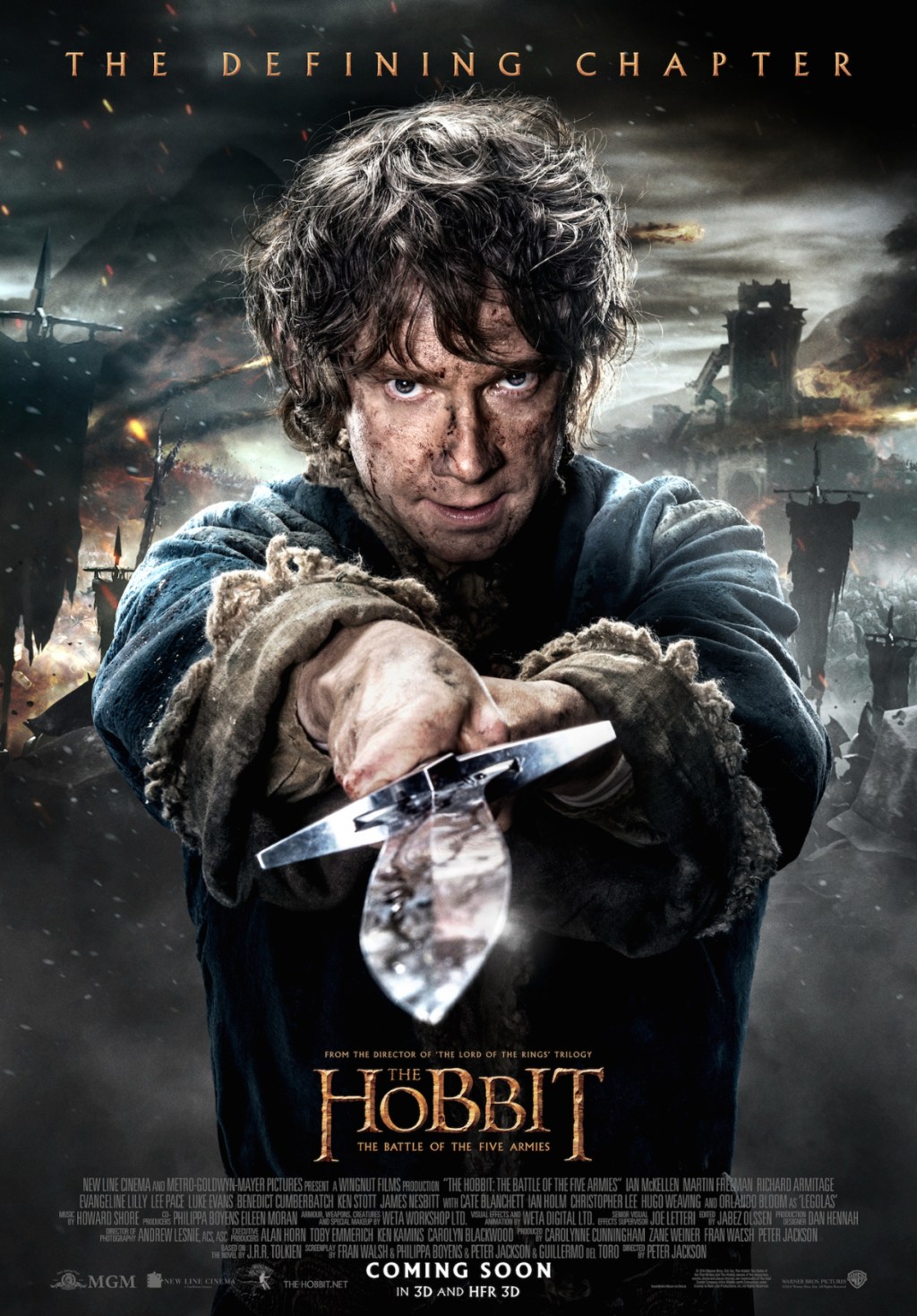
Peter Jackson’s The Hobbit: The Battle of the Five Armies (2014) is a visually stunning and emotionally charged conclusion to the trilogy. Based on a relatively short portion of J.R.R. Tolkien’s The Hobbit, the film expands the story significantly to provide a grand cinematic finale. With a stellar ensemble cast that includes Martin Freeman, Richard Armitage, Ian McKellen, Cate Blanchett, and Christopher Lee, the film delivers moments of intense drama, thrilling action, and satisfying character arcs, even as it divides opinion on its interpretation of the source material.
The story picks up immediately where The Desolation of Smaug ended, plunging viewers into Smaug’s devastating attack on Laketown. From the fiery destruction caused by the dragon to the subsequent power struggles over Erebor’s treasure, the narrative is driven by greed, loyalty, and redemption. Thorin Oakenshield’s descent into “dragon-sickness” provides a poignant core, with Richard Armitage delivering a powerful performance that captures both the character’s torment and ultimate nobility.
While the pacing occasionally falters, especially in the early stages, the film builds to a climactic battle sequence that spans much of the second half. The titular Battle of the Five Armies is a chaotic spectacle, blending Jackson’s mastery of large-scale action with moments of personal heroism. However, the film truly excels when it narrows its focus to individual characters, such as Bilbo Baggins (Martin Freeman), whose quiet bravery and moral compass serve as the heart of the story.
Martin Freeman continues to shine as Bilbo, grounding the epic tale with his nuanced and heartfelt portrayal of the reluctant adventurer. Richard Armitage’s Thorin is both tragic and commanding, while Luke Evans as Bard provides a strong, heroic counterpoint. Ian McKellen’s Gandalf remains a reassuring presence, though his role is less central than in earlier films.
One of the most memorable sequences involves Cate Blanchett, Hugo Weaving, and Christopher Lee as Galadriel, Elrond, and Saruman, respectively, in a confrontation with the Necromancer at Dol Guldur. This scene, with its eerie atmosphere and dramatic stakes, is a highlight of the film. Galadriel’s transformation and use of her immense power to banish Sauron is breathtaking, blending Blanchett’s ethereal performance with striking visual effects. The chemistry between these iconic characters, combined with Christopher Lee’s commanding presence as Saruman, adds weight to the film and serves as a bridge to The Lord of the Rings trilogy.
The film’s visuals are a triumph. From the gold-laden halls of Erebor to the sweeping landscapes of Middle-earth, every frame is a testament to the artistry of Jackson’s team. The CGI is used extensively, particularly during the battle sequences, and while some may find it overwhelming, it remains an impressive feat of filmmaking. The choreography of the action, particularly the one-on-one duels involving Thorin, Azog, and Legolas, is exhilarating, even if it occasionally stretches believability.
Howard Shore’s score enhances the film’s emotional resonance, weaving familiar themes with new motifs. The music underscores both the grandeur of the battle and the more intimate moments, such as Bilbo’s farewell to Thorin. The ending, which circles back to the beginning of The Fellowship of the Ring, provides a bittersweet sense of closure.
While The Battle of the Five Armies received mixed reviews from critics, it has been appreciated by many fans for its ambitious scope and dedication to Tolkien’s world. Some criticisms focus on the film’s pacing and reliance on CGI, but these are outweighed by its emotional depth, strong performances, and memorable set-pieces.
For viewers like yourself, who were pleasantly surprised by the film, The Battle of the Five Armies delivers on its promise of an epic finale. The sequence involving Cate Blanchett, Hugo Weaving, and Christopher Lee is particularly noteworthy, exceeding expectations and adding a layer of gravitas to the narrative. While not without its flaws, the film successfully balances spectacle with heart, making it a worthy conclusion to the trilogy and a fitting prelude to The Lord of the Rings.



Leave a Reply